The Texas sun is legendary, but for anyone looking to upgrade their home with a new concrete patio or a fresh concrete driveway, that 100°F heat is more than just a discomfort; it is a technical hurdle. In Keller, Texas, where summer humidity levels can swing wildly and the “Dry Line” often brings parched winds from the west, pouring concrete requires more than just a truck and a shovel. It requires a deep understanding of thermodynamics and chemical hydration.
At Keller Concrete Pros, we are often asked: “Is it even safe to pour concrete in July or August?” The short answer is yes. However, the long answer involves a sophisticated strategy to prevent “flash sets,” plastic shrinkage, and structural scaling. This guide explores the 2026 standards for hot-weather concreting specifically tailored for the North Texas climate.
Understanding the Chemistry of the “Texas Flash Set”
To understand why heat is a risk, you must understand that concrete doesn’t “dry” it cures. Curing is a chemical reaction called hydration, where water molecules bind with cement particles to create a rock-hard crystalline structure.
In a temperate climate (around 70°F), this process is slow and controlled. However, once the ambient temperature in Tarrant County hits 90°F and the ground temperature climbs toward 110°F, that chemical reaction goes into overdrive.
The Evaporation Rate Factor
The biggest enemy of a concrete coating or a new slab is not the heat itself, but the Evaporation Rate. If the water on the surface of the wet concrete evaporates faster than the “bleed water” (internal moisture) can rise to replace it, the surface will shrink while the bottom remains expanded. This differential leads to plastic shrinkage cracking, those unsightly, spider-web-like fractures that appear before the crew even leaves the site.
Experience Marker: In our years serving the Keller community, we’ve seen countless DIY patios fail because the homeowner didn’t account for the wind speed. A 10-mph breeze on a 95-degree day increases the evaporation rate by over 300%.
Professional Mitigation: How We Beat the Keller Heat
As a leading concrete contractor in Keller, we utilize a “Heat-Shield” protocol that ensures your investment lasts for decades, regardless of the season.
1. Solar-Timed Scheduling (The 4 AM Pour)
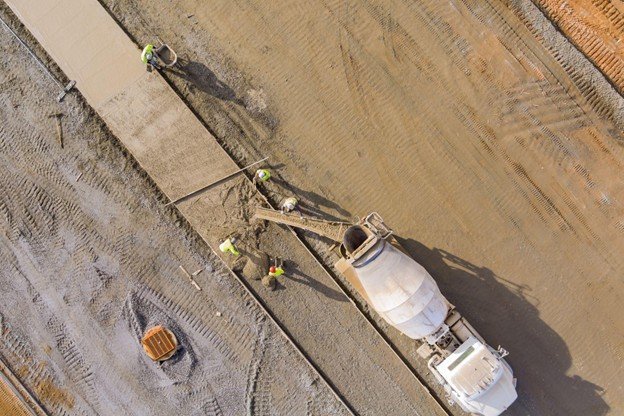
We don’t start our day when the sun comes up; we start when the ground is at its coolest. By scheduling pours for the pre-dawn hours, we ensure the initial “set” occurs before the afternoon peak. This allows the concrete to gain enough tensile strength to resist the thermal stresses of the midday sun.
2. Concrete Mix Admixtures (Retarders)
We work closely with local batch plants to customize our mix. For summer projects, we utilize ASTM C494 Type B (Retarding Admixtures). These chemicals temporarily “pause” the hydration process, giving our finishers the “open time” they need to produce a high-quality aesthetic finish, whether it’s a standard broom finish or high-end stamped concrete.
3. Subgrade Saturation
One “hidden gem” of expert concreting is prepping the dirt. If we pour wet concrete onto dry, parched Keller clay, the ground will suck the moisture out of the bottom of the slab like a sponge. We heavily saturate the subgrade the night before and again right before the pour to ensure the slab cures evenly from top to bottom.
Concrete Patio vs. Driveway: Summer Installation Nuances
The type of project you are undertaking changes the strategy.
- For Concrete Patios: These are often in shaded backyards or near pools. The varying shade patterns can cause “differential setting,” where one half of the patio cures faster than the other. We use sun-shields or coordinated pouring sequences to manage this.
- For Concrete Driveways: Because driveways are usually in full sun, they are at a higher risk. If you are debating between Concrete and Asphalt, remember that while concrete is harder to pour in summer, asphalt will remain soft and “tacky” for weeks in the Texas heat, making concrete the superior long-term choice for Keller homes.
The Importance of Post-Pour Curing (The First 24 Hours)
The work doesn’t end when the truck leaves. In fact, the most critical phase of a summer pour is the Curing Period.
Wet Curing vs. Curing Compounds
In extreme heat, we often recommend “Wet Curing.” This involves covering the slab with burlap and keeping it constantly misted with water for 3 to 7 days. This prevents the “Heat of Hydration” from cooking the slab from the inside out.
Alternatively, for many residential projects, we apply a liquid membrane-forming curing compound. This acts like a “sunblock” for your concrete, sealing the moisture inside so the chemical reaction can complete fully. This is essential for preventing “dusting”—that chalky residue you find on poorly cured concrete.
Frequently Asked Questions about Summer Concreting
Q: Can I pour concrete if it’s over 100°F?
Yes, but it requires ACI (American Concrete Institute) hot-weather protocols. This includes chilling the mix with ice at the batch plant and using specific chemical retarders. At Keller Concrete Pros, we monitor the weather daily and will only proceed if we can guarantee the structural integrity of the slab.
Q: How long does it take to install a patio in the summer?
Surprisingly, the installation time is often faster in the summer because the concrete “goes off” (hardens) quicker. However, the prep work is more intensive to ensure the heat doesn’t ruin the finish.
Q: What if my concrete already has cracks?
If your existing driveway has suffered from past heat damage or shifting North Texas soil, you might not need a full replacement. We specialize in concrete leveling and repair to restore old slabs without the cost of a new pour.
Why Local Expertise Matters in Tarrant County
Hiring a “fly-by-night” crew for a summer pour is the most common cause of concrete failure in Keller. A contractor from a cooler climate might not understand our local clay’s expansion index or the sheer intensity of the North Texas UV index.
When you choose a local specialist, you are paying for:
- Knowledge of Local Suppliers: Knowing which batch plants in the Keller/Fort Worth area have the most consistent summer mixes.
- Permit Knowledge: Ensuring your project meets Keller’s specific city codes for drainage and setbacks.
- Experience-Based Quality: We know how the wind behaves near Bear Creek and how the shade hits homes in Marshall Ridge, details that dictate a successful pour.
Conclusion: Planning Your Summer Project
Pouring concrete in a Texas summer is a feat of engineering, not a DIY weekend project. By controlling the temperature of the materials, managing the evaporation rate, and utilizing advanced chemical admixtures, we can deliver a concrete driveway or patio that is actually stronger than one poured in the dead of winter.
Don’t let the heatwave stop your home improvement plans. With the right team, the summer is a fantastic time to upgrade your outdoor living space.